
Come on up to the porch and sit a spell. Today’s history starts with a bell most of us think we already know.
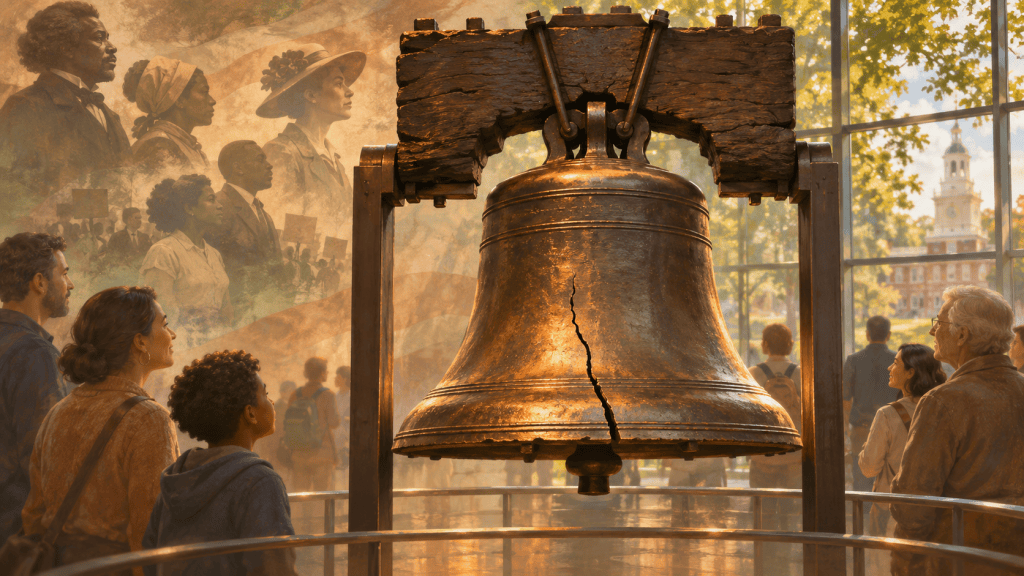
We learn the familiar picture: the Liberty Bell, its famous crack, ringing out for American independence. Some of us remember it ringing on July 4, 1776. Others remember the crack as part of the Revolution, as if the bell broke in the very act of announcing freedom. I had a few details crossed in my own memory, including mixing it up with the Statue of Liberty. That is easy enough to do when both symbols have come to stand for freedom.
The real story starts with a bell that was not yet called the Liberty Bell.
In 1751, Pennsylvania’s Assembly ordered a bell for the State House in Philadelphia. The first bell arrived from London the next year, then cracked when it was hung up for a test. Local founders John Pass and John Stow melted it down and recast it. Their bell was raised in the State House steeple in 1753. That is the bell we now call the Liberty Bell. For decades, it served the city in practical ways, calling lawmakers to work and gathering people to hear news.
Around the bell’s crown is an inscription from Leviticus: “Proclaim Liberty Throughout All the Land Unto All the Inhabitants thereof.” In its biblical setting, the verse belongs to the Jubilee, a time associated with restoring land and freeing people from servitude. Assembly Speaker Isaac Norris chose the inscription. He may have meant it to mark the fiftieth anniversary of William Penn’s 1701 Charter of Privileges, which granted religious liberties and political self-government in Pennsylvania. That is a possibility, not a certainty. The bell was ordered for the State House; the meaning we now attach to it grew over time.
The famous July 4 story grew over time, too. There is no evidence that this bell rang on July 4, 1776, to announce independence. The Declaration was publicly read in Philadelphia on July 8. Some older National Park Service educational material says the bell may have rung that day, while the park’s current main history page says there is no evidence it rang on either July 4 or July 8. The careful answer is that we do not know.
By 1835, a story that the bell had rung on July 4 was already circulating. An abolitionist writer visiting the State House claimed it had rung that day and every Fourth of July since. That account is not proof that it happened. It is a glimpse of how the story was being remembered and repeated. In 1847, writer George Lippard published a fictional tale of an old bell ringer waiting for the signal that independence had been declared. His dramatic version helped popularize the Revolutionary scene and make it feel like eyewitness history.
But the most consequential change in the bell’s story was not the crack or the ringing legend. It was the name.
The earliest known printed use of “Liberty Bell” appears in that 1835 abolitionist publication, The Anti-Slavery Record. The writer looked at the inscription and asked whether abolitionists might live to hear liberty truly proclaimed to everyone. More than two million Black people were enslaved in the United States. The writer called the bell’s peals “a mockery” while people remained in bondage. The words on the bell had been there for decades. The abolitionist gave them a new force, turning them into a direct challenge to a nation that celebrated liberty while denying it to so many.
That is the rub in the familiar story. The bell seems to arrive in our history already named, already wrapped in the Revolution, already speaking for everyone. But abolitionists made “Liberty Bell” a name people would remember. Black and white abolitionists used the symbols of the Revolution to demand freedom and full citizenship. The bell’s meaning was not simply inherited from the founders; it was shaped by people who insisted that the promise had to reach them, too.
The contradiction was visible in Philadelphia itself. Pennsylvania passed a gradual abolition law in 1780, but it did not immediately free the people still held in slavery. In 1837, the state withdrew free Black men’s right to vote. Black Philadelphians had also been barred from attending Fourth of July ceremonies in Independence Square in 1812 and at least the following year. The city could ring bells and celebrate liberty while denying Black residents equal rights. That context gives the abolitionist’s words their weight. The writer was not asking the country to admire a beautiful inscription. The writer was asking when the country would obey it.
The bell’s message traveled into later struggles. In 1915, Pennsylvania suffragists commissioned the Justice Bell, a close replica. They toured all 67 counties with its clapper chained, making its silence a symbol of women being denied the vote. After the Nineteenth Amendment was ratified in 1920, the bell rang 48 times, once for every state then in the Union. Civil rights leaders also drew on the Liberty Bell’s promise. Each generation brought its own demand to the words around the bell’s crown.
And then there is the crack itself. The first bell cracked during its first test in 1752, before Pass and Stow recast it. The famous crack belongs to the later bell. No one recorded exactly when or why its first narrow split appeared. The National Park Service says it most likely developed in the early 1840s after decades of use. In 1846, workers tried to repair it before Washington’s Birthday by widening the crack with a method called stop drilling. The wide gap we recognize today is largely the repair. Another fissure developed, the repair failed, and the bell was silenced.
The photographs I took show that long, dark line running down the bell. It is easy to focus on the crack because it is so visible. But the crack is only one layer of the story: an early bell that failed its first test, a later bell that served a city, an uncertain Revolutionary legend, an abolitionist name, and a message that generations of people have carried into their own struggles.
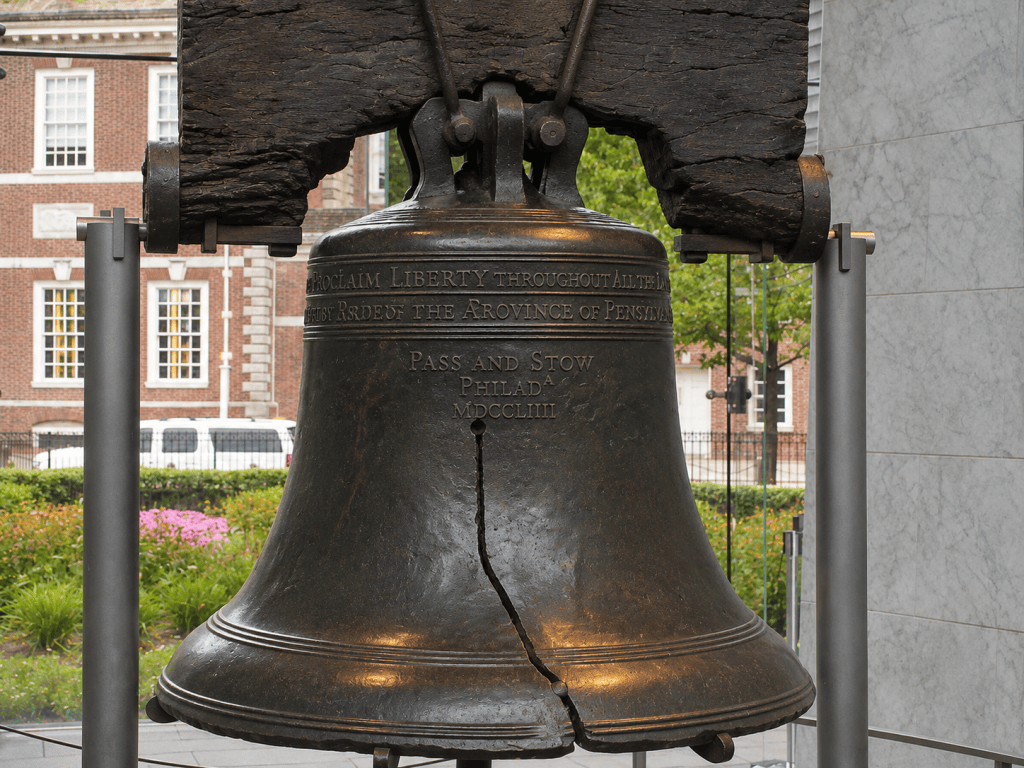
I have been to see the bell. Standing there, I could feel the history radiating from it. That feeling did not come from one clean story about a bell ringing on a single day. It came from all the stories gathered around it: the history we were taught, the details we had not heard, and the people who kept asking what liberty meant if it did not include them.
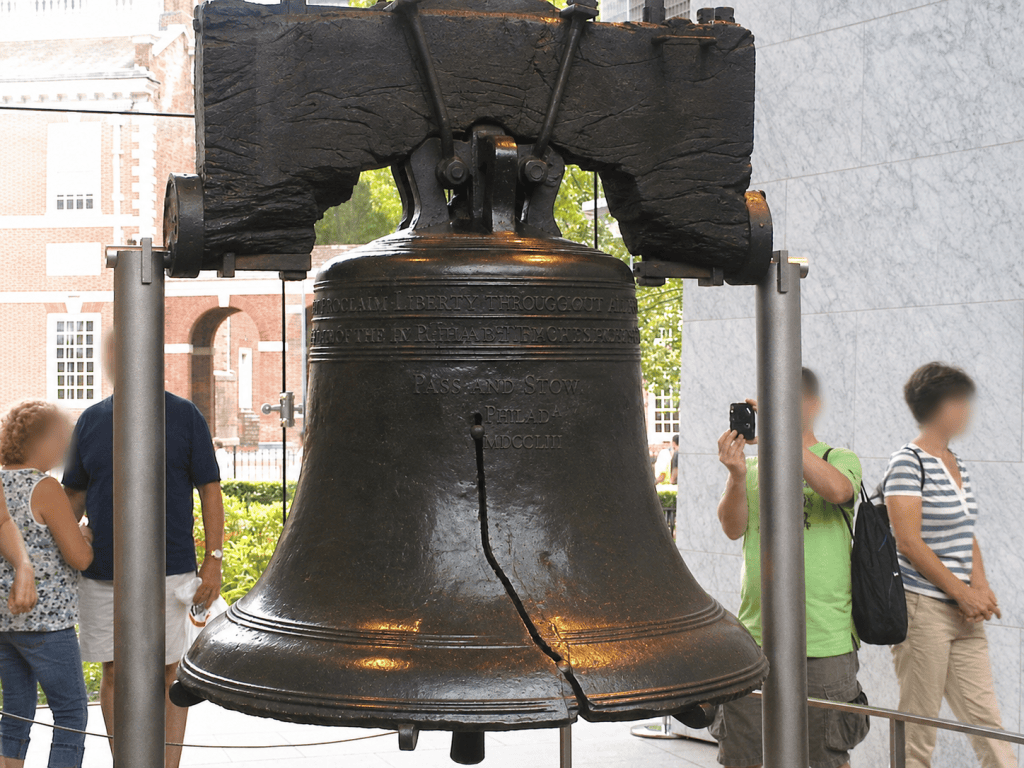
The bell cannot ring anymore, but its inscription still asks something of us. “All the inhabitants” is a broad promise. The history of the Liberty Bell reminds us that promises do not fulfill themselves. People have to keep calling the country toward them.
Until next time, y’all come sit a spell. There’s always room for you on the porch.


Leave a Reply