
Hiroshima, Nagasaki, and the Families Left Waiting
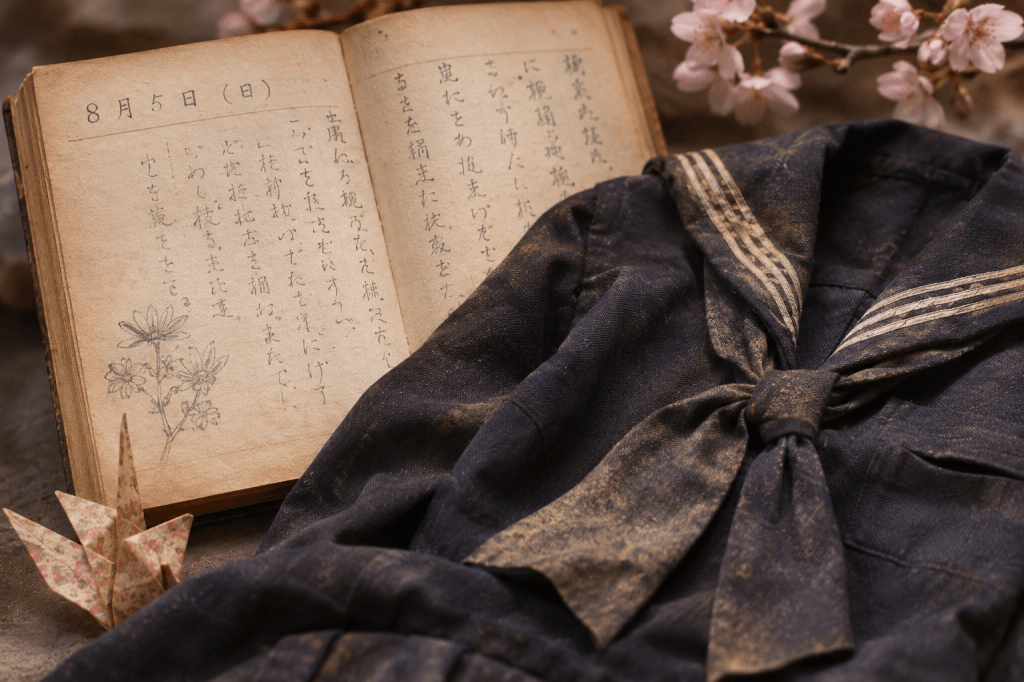
AI-generated illustration inspired by historical accounts and artifacts preserved at the Hiroshima Peace Memorial Museum. Not a photograph of the original belongings.
Hey y’all. Come on up, grab something to sip on, and find yourself a place here on the porch.
Today’s conversation isn’t an easy one. We’re talking about Hiroshima and Nagasaki, the decisions that led to the atomic bombings, and the human lives forever changed by them.
History often asks us to consider the decisions of governments and military leaders. But today, I want us to remember the people who lived with the consequences.
So settle in. Let’s give their stories the attention they deserve.
August 5, 1945
It was Sunday. The sun was shining in Hiroshima.
Twelve-year-old Mutsuko Ishizaki went swimming with a friend. She wasn’t particularly good at it, and she was frustrated that everyone else seemed able to float while she struggled.
But when she sat down to write in her diary that evening, she decided it had been a good day.
“But today was a good day.”
In another home, Tomiko Umekita helped bathe little Michiko. Their mother didn’t appreciate splashing in the bathwater, but Tomiko was happy to splash right along with her. They floated toys and played together.
Later, Tomiko prepared udon noodles for dinner. Her parents complimented the broth she’d seasoned herself.
At the end of her diary entry, Tomiko reflected:
“Anything can be interesting when I do my best.”
Etsuko Kumamoto enjoyed a leisurely morning because there was no school. She cooked rice, ate with her family, and helped with household chores.
Three girls. Three families. Three ordinary Sundays.
There was a war going on, of course. Japan had been fighting for years. Food was scarce, air raids were a constant threat, and even schoolchildren were expected to contribute to the war effort.
But childhood hadn’t disappeared entirely.
There was still swimming. There were still little sisters to entertain. There were still family dinners and the quiet satisfaction of doing something well.
And there were still plans for tomorrow.
The next morning, all three girls would leave home to participate in building-demolition work. Students were being mobilized to help create firebreaks that might prevent fires from spreading during air raids.
Their families expected them to return.
That is where I want to begin this story.
Not with the bomb.
Not with the men who decided to drop it.
But with the people who were waiting for someone to come home.
Monday Morning
At 8:15 a.m. on August 6, 1945, an American B-29 bomber dropped an atomic bomb over Hiroshima.
The weapon, nicknamed Little Boy, exploded above the city.
The flash was followed by extraordinary heat, a devastating blast, fires, and radiation.
Buildings collapsed. Streets disappeared beneath rubble. People were killed instantly. Others were terribly injured.
Those who survived the initial explosion often found themselves surrounded by a city they could no longer recognize.
And somewhere in that destruction were children who had left their homes only a short time earlier.
Mutsuko, Tomiko, and Etsuko were first-year students at First Hiroshima Prefectural Girls High School. Their demolition work had taken them near Dohashi, approximately 800 meters from the bomb’s hypocenter.
Their parents did not know what had happened to them.
They only knew their daughters hadn’t come home.
Looking for Mutsuko
Mutsuko Ishizaki’s father, Shuichi, searched for his daughter day after day.
He went from place to place, hoping someone had seen her. Perhaps she had escaped. Perhaps she had been taken to a relief station. Perhaps she was injured and unable to tell anyone who she was.
He never found her.
But he found her school uniform.
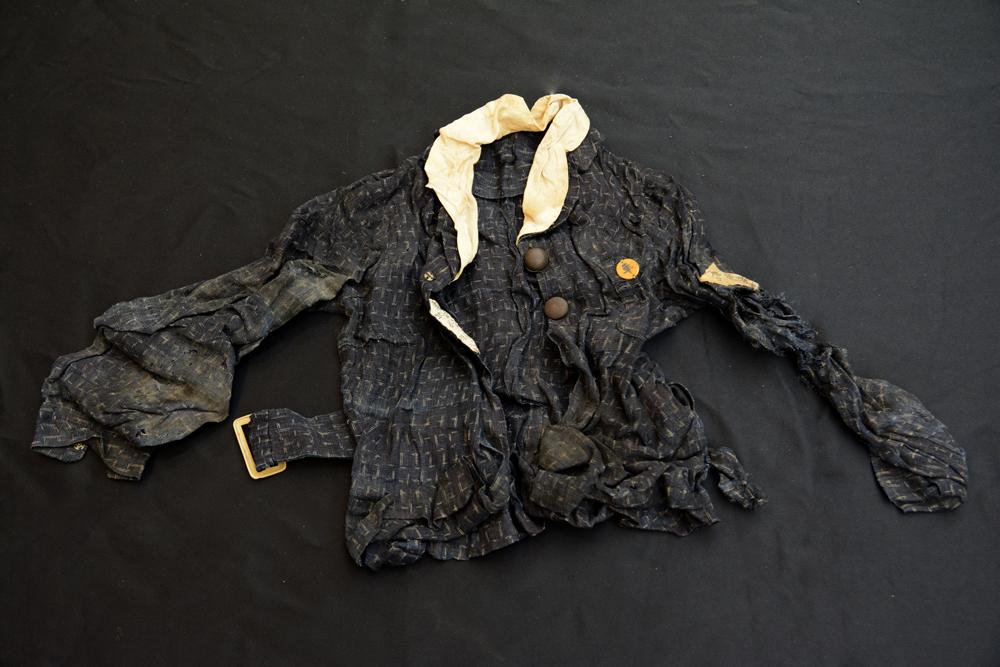
After the atomic bombing of Hiroshima on August 6, 1945, Mutsuko’s father searched desperately for his daughter. He never found her remains, but he recovered her school uniform, made from the fabric of his own kimono.
The uniform is preserved today at the Hiroshima Peace Memorial Museum, a poignant reminder of a daughter who never came home.
Image: Hiroshima Peace Memorial Museum.
Before beginning demolition work that morning, Mutsuko had removed her uniform and left it in the shade. Somehow, the clothing escaped the destruction.
Her father brought it home.
The Hiroshima Peace Memorial Museum preserves that uniform today.
Her body was never recovered.
Mutsuko’s mother, Yasuyo, kept her daughter’s diary.
She would take it out and read it from time to time, returning to the ordinary words her child had written on the last evening of her life.
There was no final conversation preserved in those pages. No farewell. No knowledge of what was coming.
Just a girl who had gone swimming and decided she’d had a good day.
Her mother treasured that diary until her own death.
I keep thinking about what it must mean to search for someone without knowing where to look.
When a person dies and the family knows what happened, there is grief. There are arrangements to make, people to notify, and a terrible reality to accept.
But what happens when there is no certainty?
How long do you keep looking?
How many times do you hear that someone matching your child’s description has been seen somewhere?
And when do you allow yourself to stop hoping?
We cannot know everything Mutsuko’s parents thought or felt. Their recorded experiences tell us enough without putting words in their mouths.
Their daughter was missing.
Her father searched.
He brought home her uniform.
And her mother kept her diary.
Finding Etsuko
Etsuko Kumamoto’s father also went looking.
Unlike Mutsuko’s family, he eventually found his daughter alive.
But she was terribly burned. Her body was swollen, and she could no longer see.
Her father remained with her.
The following morning, August 7, something remarkable happened. Etsuko opened her eyes.
Her father asked:
“Can you see dad?”
And Etsuko answered:
“I can.”
For a moment, there was recognition between a father and his daughter.
Then her condition deteriorated, and she died.
Her father preserved her diary.
Etsuko’s story reminds us that not every family was left without answers. Some found the people they loved, only to lose them afterward.
And the suffering did not end when the fires were extinguished.
For many families, it was only beginning.
Too Late for Tomiko
Tomiko Umekita’s father searched throughout August 6 and continued the following day.
He could not find her.
On August 8, he discovered information posted on a school notice board indicating that Tomiko had escaped toward Koi.
He hurried there.
But Tomiko had died before dawn that morning.
Someone had dressed her in an older student’s yukata.
She had survived the initial bombing, escaped the destruction, and lived for nearly two more days.
Her father found her too late.
At home, her mother, Akie, kept Tomiko’s diary and drawings tucked away in a drawer.
According to the Hiroshima Peace Memorial Museum, her parents seldom spoke about their daughter after her death.
But they kept what she had left behind.
I wonder how often her mother remembered that last Sunday evening.
The udon noodles. The laughter in the bath. The little girl who had been so pleased that her parents enjoyed her cooking.
We tend to remember history through the events that changed the world.
Families remember through moments that changed their own.
The Person on the Steps
There is an artifact preserved at the Hiroshima Peace Memorial Museum called Human Shadow Etched in Stone.
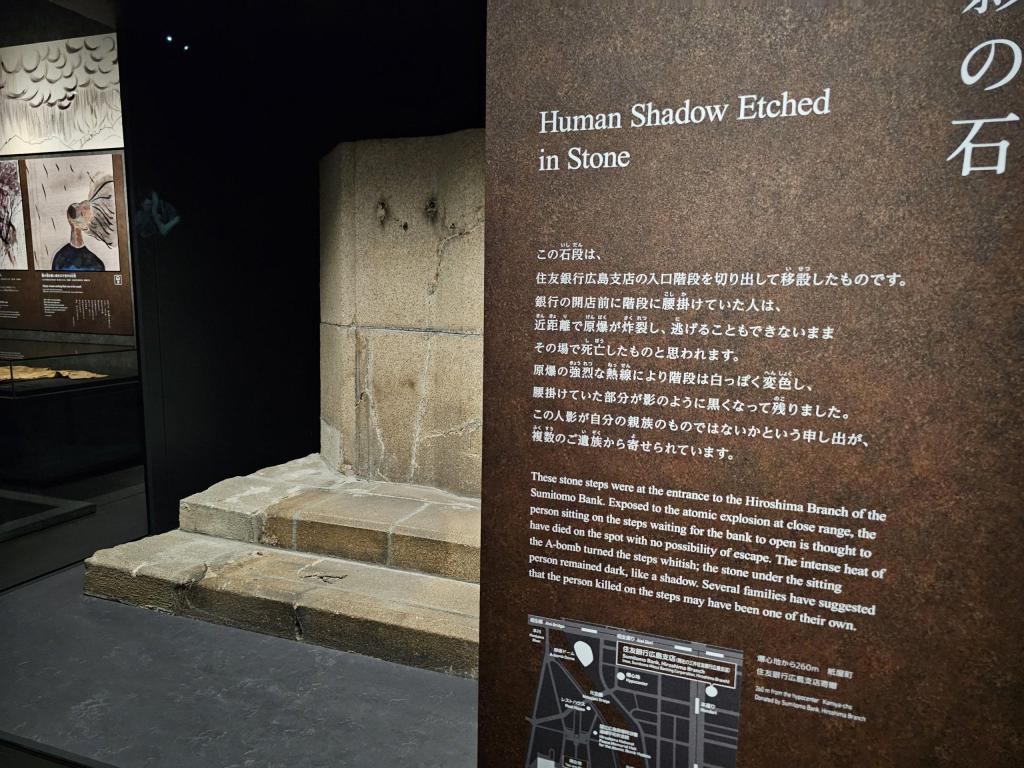
The darkened outline on these stone steps from the former Sumitomo Bank was left where a person’s body shielded the surface from the atomic bomb’s intense thermal radiation. The individual’s identity remains unknown, although several families have wondered whether the shadow belonged to a missing loved one.
Image: Hiroshima Peace Memorial Museum. The shadow is a change in the stone’s appearance, not human remains.
It is a section of stone steps from the former Sumitomo Bank, approximately 260 meters from the hypocenter.
On the morning of August 6, someone was sitting on those steps, apparently waiting for the bank to open.
When the bomb exploded, intense thermal radiation altered the exposed stone, making it lighter. The portion shielded by the person’s body remained darker.
The resulting contrast resembled a human shadow.
There is an important distinction here.
The shadow is not a person’s remains, and it is not evidence that someone was vaporized into the stone. It is a physical record of how the heat affected the surface around a human body.
The museum believes the person died at the scene.
But the person’s identity has not been established.
And according to the museum, several bereaved families have suggested that the shadow might have been left by someone they loved.
Think about that for a moment.
Several families, looking at the same dark shape on a set of stone steps, wondering whether it might be the last trace of someone who never came home.
We cannot say who the person was.
We cannot say which family, if any, was right.
We can only acknowledge that someone was sitting there that morning, waiting for an ordinary business to open.
And that the uncertainty surrounding their identity became part of other families’ grief.
A City Searching
Hiroshima’s destruction made the ordinary work of finding missing people almost impossible.
Hospitals and medical facilities were damaged. Doctors and nurses were among the dead and injured. Transportation and communications were disrupted.
Survivors searched relief stations, burned neighborhoods, riverbanks, and the remains of their homes.
Some found loved ones alive.
Some found bodies.
Some recovered belongings.
And some found nothing they could identify.
The scale of the destruction meant that families could not always rely on the familiar ways of learning what had happened to someone.
A child might have been taken to a temporary treatment station. A wounded person might have escaped toward another neighborhood. A body might have been recovered by strangers who had no way of knowing the person’s name.
And in some places, the destruction was so complete that no identifiable remains were recovered.
For those left behind, the uncertainty could become a second form of suffering.
Not knowing where someone died.
Not knowing whether they suffered.
Not knowing whether anyone was with them.
Not knowing where they were laid to rest.
The search for answers did not necessarily end when the war ended.
For some families, it continued for decades.
Three More Mornings
While Hiroshima’s survivors were searching for their loved ones, the war continued.
On August 7, people in Nagasaki went to work, cared for their families, and tried to manage daily life under wartime conditions.
On August 8, they did it again.
Some may have heard reports about the destruction of Hiroshima, although reliable information was limited.
But Nagasaki was not Hiroshima.
It was another city, with its own neighborhoods, schools, churches, factories, families, and histories.
And its people had no way of knowing exactly what was coming.
On August 9, 1945, at 11:02 a.m., a second American atomic bomb exploded over Nagasaki.
The weapon was nicknamed Fat Man.
Again, the destruction was immense.
Again, people who had left home that morning did not return.
And again, families began searching.
Under the Summer Sky
Kazutoshi Nakamura was seventeen years old when Nagasaki was bombed.
He remembered the blue sky that morning, the summer sunshine, and the cicadas singing in the trees.
His family lived in North Yamazato-machi, near Nagasaki Medical College.
The war had made life difficult. Food was scarce, air-raid warnings were frequent, and the family often spent nights crowded into a small shelter.
His mother worked hard to find enough food for her children.
On August 9, she needed to visit an acquaintance in the countryside to exchange stored rice for a newer ration.
Kazutoshi helped her carry the heavy rice.
As they left home, he noticed his two younger brothers and his older sister’s two children watching them go.
He would later remember that moment as their final farewell.
When they reached their destination, Kazutoshi became absorbed in playing with another boy.
His mother needed to return home to the younger children.
She agreed to let him stay a little longer.
Her last words to him were:
“I guess it’s OK, but make sure you don’t come home too late.”
She gathered the rice and potatoes she was taking home for the children and started back down the road.
Kazutoshi never saw her again.
Shortly afterward, the bomb exploded.
Looking for Mother
Kazutoshi survived the explosion beneath the wreckage of the house where he had been visiting.
When he escaped, the familiar landscape had disappeared.
He began making his way toward home, searching for his family.
Eventually, he encountered his father.
Their reunion brought a moment of relief, but his father’s first concern was the rest of the family.
He wanted to know where Kazutoshi’s mother was.
Kazutoshi explained that she had left for home before the explosion.
Together, they began searching.
When they reached the ruins of their neighborhood, they found that the four children who had watched Kazutoshi and his mother leave that morning had been killed.
His two younger brothers and his sister’s two children were gone.
Kazutoshi and his father gathered wood and cremated their bodies.
Then they continued looking for his mother.
Three days after the bombing, they were still searching among the dead.
They could not find her.
Finally, his father told him they had to stop.
Perhaps she had been carried far away by the blast. Perhaps she had gone directly to heaven.
It was not an answer.
It was a father trying to bring an impossible search to an end.
Years passed.
Kazutoshi grew older. His father died. But the memory of his mother remained, as did the uncertainty surrounding her fate.
He continued visiting the Memorial Vault for the Unclaimed Remains of the Atomic Bomb Victims in Nagasaki’s Peace Park.
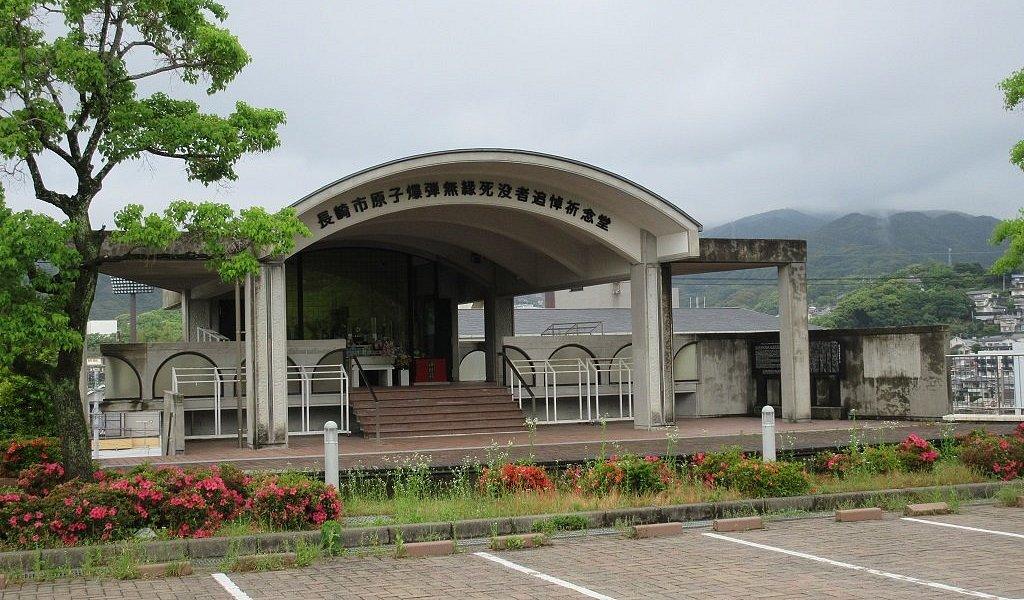
The Memorial Vault for the Unclaimed Remains of Atomic Bomb Victims in Nagasaki holds the remains of victims who could not be identified or returned to their families.
Survivor Kazutoshi Nakamura visited the memorial, hoping that his mother’s remains might be among those laid to rest there. She disappeared following the bombing on August 9, 1945, and her fate was never conclusively established.
Photograph: Nagasaki Peace Park. Credit the original photographer or institution when publishing.
His family gathered there each August 9.
He hoped that someone, somewhere, had found his mother’s remains and brought them to that resting place.
That hope is heartbreaking in its simplicity.
He could not know where his mother was.
But he could hope that someone had cared for her after death.
And perhaps that is another humanitarian consequence we don’t discuss often enough.
Not simply the loss of life, but the loss of the ability to perform the ordinary acts of love and responsibility that follow a death.
To identify someone.
To bring them home.
To bury them.
To know where they rest.
The Numbers We Remember
By the end of 1945, approximately 140,000 people were estimated to have died as a result of the Hiroshima bombing, and approximately 74,000 in Nagasaki.
These estimates include people who died in the months afterward, not only those killed immediately.
The precise totals remain uncertain.
The dead included children and adults, civilians and military personnel, Japanese residents, Koreans, and people of other nationalities.
Some died in the initial blast and fires.
Others died from burns, injuries, and acute radiation sickness.
Survivors would also face longer-term health consequences, including increased risks of certain cancers, along with psychological suffering and, in some cases, social discrimination.
The numbers matter.
They help us understand the enormous scale of the catastrophe.
But a number cannot tell us what it meant to return to an empty home.
It cannot tell us what it meant to keep a child’s diary in a drawer for decades.
And it cannot tell us what it meant to visit a memorial year after year, hoping that a missing mother’s remains might somehow be there.
The Lives That Continued
The people who survived Hiroshima and Nagasaki became known as hibakusha, a Japanese term meaning people affected by the atomic bombings.
Some spent years recovering from their injuries.
Some lived with chronic illness or uncertainty about their future health.
Some struggled with the memories of what they had witnessed.
And some became teachers, parents, artists, researchers, and advocates for peace.
They rebuilt lives in the shadow of extraordinary loss.
Their stories deserve more than our sympathy.
They deserve our attention to what they actually experienced, including the parts that don’t fit neatly into a narrative of devastation.
There was grief, certainly.
But there was also love.
There was determination.
There was the work of raising children, rebuilding neighborhoods, caring for the sick, and preserving memories.
For many survivors, remembrance became a lifelong responsibility.
They told their stories so that those who died would not be reduced to statistics, and so that future generations might understand the human consequences of nuclear weapons.
The Question That Remains
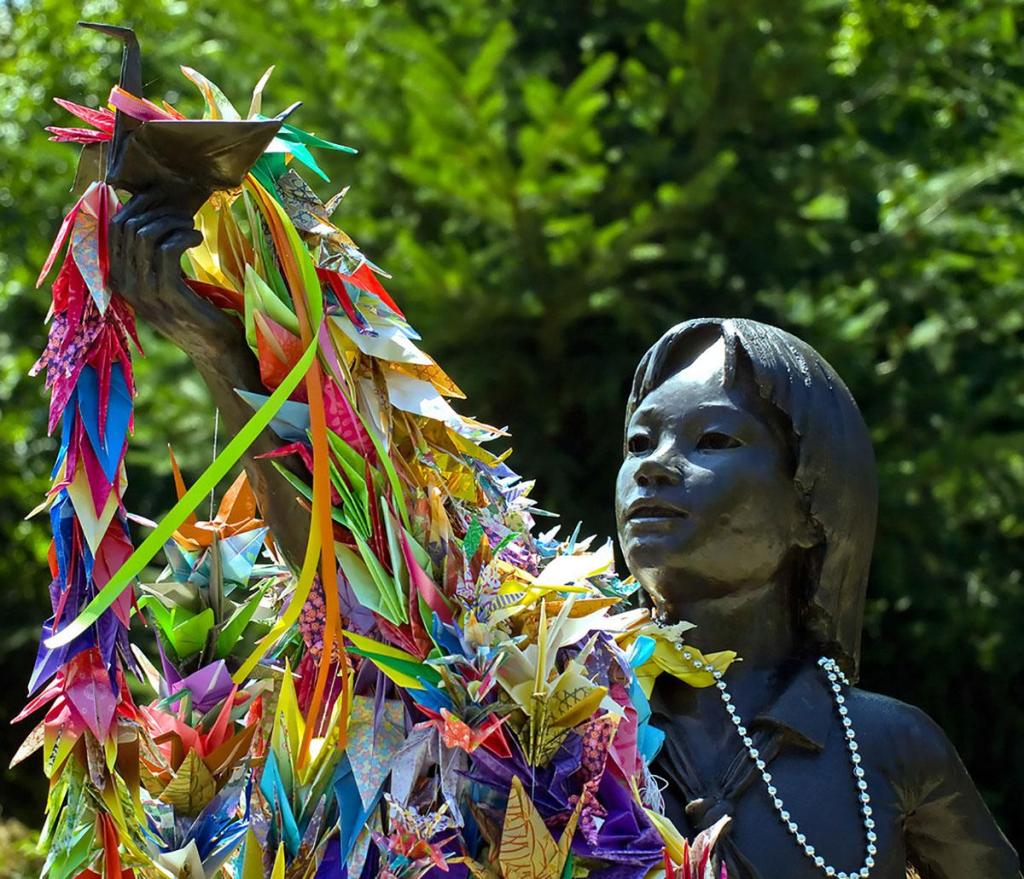
Thousands of folded paper cranes are offered at Hiroshima’s Children’s Peace Monument, honoring Sadako Sasaki and the children who died because of the atomic bombing.
Each crane is a small act of remembrance, a reminder that behind the history are individual lives, grieving families, and stories that deserve to be remembered.
Photograph: Hiroshima Peace Memorial Park. Credit the original photographer when publishing.
When we discuss the atomic bombings of Hiroshima and Nagasaki, we often begin with the military decisions.
Why were the bombs dropped?
Did they shorten the war?
Was there another way?
Those are serious historical questions, and they deserve careful examination.
But they are not the only questions.
There is another one I find myself returning to.
What happens to the families of people who never come home, especially when they never learn what happened?
What happens when there is no body to identify, no grave to visit, no final conversation, and no certainty?
What does remembrance look like when the only things left are a diary, a drawing, a school uniform, or the possibility that a darkened patch of stone marks the last place someone sat?
We may never know the identity of the person on the bank steps.
We know that Mutsuko Ishizaki’s father searched for her and never found her.
We know that Tomiko Umekita’s father reached her too late.
We know that Etsuko Kumamoto’s father found his daughter and briefly heard her answer him before she died.
And we know that Kazutoshi Nakamura continued visiting a memorial vault in Nagasaki, hoping his mother had found a resting place there.
These are not simply stories about how people died.
They are stories about how people loved them.
The Last Ordinary Day
I keep coming back to August 5.
To Mutsuko, who went swimming and thought she’d had a good day.
To Tomiko, who splashed in the bath with her little sister and made dinner for her family.
To Etsuko, who enjoyed breakfast at home.
None of them knew that their words would one day be preserved in a museum.
They were not trying to leave messages for future generations.
They were simply recording their lives.
Their families made sure those lives were remembered.
And perhaps that is where our responsibility begins, too.
Not with imagining that we can fully understand what they suffered.
Not with pretending that every question has an answer.
But with remembering that every person who disappeared from those cities belonged to a world of relationships, memories, hopes, and ordinary routines.
Someone knew their favorite food.
Someone recognized their footsteps.
Someone expected to see them at the end of the day.
And for some families, the waiting never truly ended.
They were not just casualties of war. They were the people who never came home.
And their stories deserve to be told.
Y’all come sit a spell.
Sources
- Hiroshima Peace Memorial Museum. Last Logs on August 5. The final diary entries of Etsuko Kumamoto, Mutsuko Ishizaki, and Tomiko Umekita, together with family accounts.
https://artsandculture.google.com/story/last-logs-on-august-5-hiroshima-peace-memorial-museum/hwUBB1_5ztBUKQ?hl=en - Hiroshima Peace Memorial Museum. School Uniform Found in the Burnt-Out Ruins. Artifact 3101-0106. Mutsuko Ishizaki’s recovered school uniform.
https://hpmm-db.jp/list/detail/?cate=artifact_en&data_id=22606&search_type=detail - Hiroshima Peace Memorial Museum. Human Shadow Etched in Stone. Artifact 5102-0021. Sumitomo Bank steps and the unidentified victim.
https://hpmm-db.jp/list/detail/?cate=artifact_en&data_id=24324&search_type=detail - Nagasaki National Peace Memorial Hall for the Atomic Bomb Victims. Memories of Urakami, 11th Special Exhibition of Atomic Bombing Memoirs. Kazutoshi Nakamura, Under the Summer Sky.
https://www.peace-nagasaki.go.jp/en/11th-exhibition - Hiroshima City. The Realities of the Atomic Bombing. Historical context, casualties, and radiation effects.
https://www.city.hiroshima.lg.jp/english/peace/1029920/1009857.html - Hiroshima City. How Many People Died Because of the Atomic Bombing? Official explanation of the Hiroshima casualty estimates.
https://www.city.hiroshima.lg.jp/english/peace/1029875/1010074.html - Hiroshima Prefectural Office. The Path from the Atomic Bombing to Reconstruction of Hiroshima. Includes historical casualty estimates for Hiroshima and Nagasaki.
https://www.pref.hiroshima.lg.jp/site/hiroshimaforpeace-en/reconstruction-atomic-bombing.html


Leave a Reply