
What’s a place you visited that felt like home?
As an avid traveler, I’m often asked which place I love most and why everyone should go there. The first part is easy. Alaska. The second part is where I become difficult.
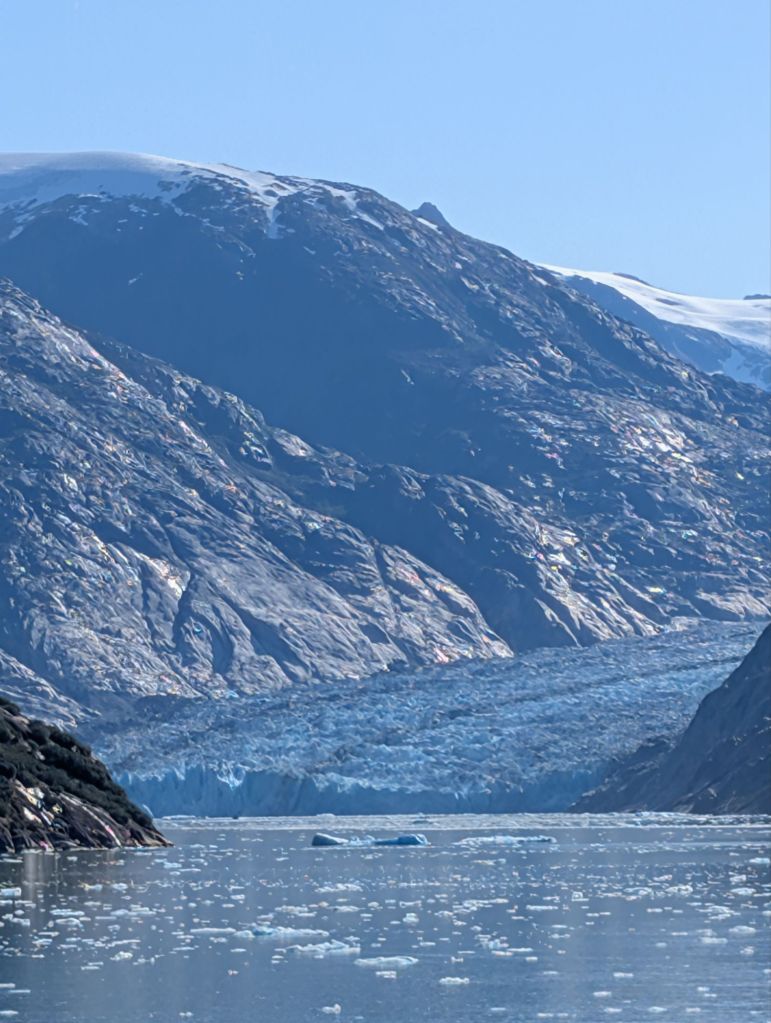
I lived there for six months and have gone back three times. I love her. I’ll show you my pictures and tell you why she gets under my skin, but I’m going to have to trust you with her. I’m not entirely sure I trust us with beautiful things.
See? Difficult already.
I could give you the usual list. Mountains. Glaciers. Wildlife. Water that stretches farther than your eyes seem prepared for. All true, and none of it quite explains why I speak about Alaska as though she might overhear me.
She might.
In 1992, I watched Mount Spurr erupt. I stood there watching the ash cloud drift, aware that the landscape in front of me was making a decision of its own. You can read about a volcano or see one in a photograph. Watching the sky change because the earth beneath it has moved gives you a different understanding of the word landscape.
Alaska never promised to sit still and look pretty for us.
I don’t say that to make her sound cruel. It’s one of the things I love about her. There are places that seem to invite you to arrange them into a pleasant background for your life. Alaska has never felt like one of them to me. She was there before I arrived. She would be there after I left. My job was to notice, not to direct.
I learned that on much quieter days, too.
For my twenty-fifth birthday, I had a beach bonfire beside Cook Inlet. We brought a bucket of grocery-store fried chicken and carrot cake. Nothing fancy. Just food, fire, and people I wanted beside me.
The light seemed to last forever. For about six hours, sunset and sunrise blurred together as the sun passed behind the mountains. And out in the inlet, a pod of belugas swam by.
I remember the chicken. I remember the cake. I remember sitting by that fire while the sky kept changing and the belugas moved through the water. Alaska didn’t arrange any of it for my birthday. We were simply lucky enough to be there together.
If you’re looking for a reason to see Alaska, I could stop with that birthday. I could show you a picture, if I have one, and say, Look what she can do. But I can’t promise you belugas with your cake. I wouldn’t want to. The moment belonged to a place that was living its own life, and I happened to get a seat beside it.
Another time, I was halibut fishing in a thirty-two-foot boat when a gray whale surfaced beside us.
I had gone out to fish. The whale had other plans. For a moment the boat, the fishing, and whatever I’d expected from the day became considerably less interesting than the enormous living creature sharing the water with us.
That’s a pattern with Alaska. You make your plans, and she reminds you that they are yours alone.
My most revealing whale encounter, though, came on a whale-watching tour. A resident pod of orcas swam past the boat. We had the water, a glacier-cut valley, mountains, and a pod of wild orcas moving through a place that was theirs.
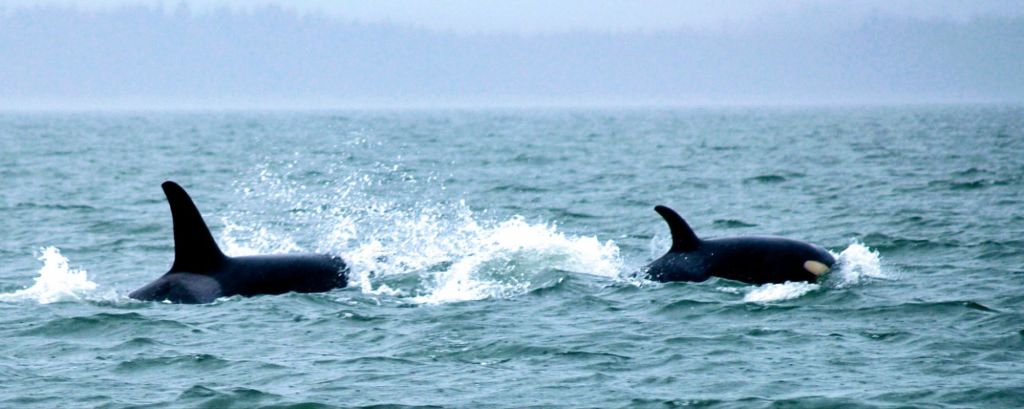
Another passenger called them boring. You could see orcas at SeaWorld, she said.
No, ma’am. Absolutely not.
You could see an orca there. You could not see this.
I wanted to wave my arms at the entire valley. At the mountains. At the water. At the pod that had chosen its own course and owed us nothing. I wanted to ask what she thought she’d come all this way to find.
Perhaps she wanted the whales to perform. Perhaps the mountains were so big she’d stopped seeing them. I don’t know her, and I won’t pretend to know what was in her head. I know what her comment brought up in me.
We can travel somewhere magnificent and still arrive carrying the expectation that it should entertain us on command.
That worries me.
I love to travel. I know that my own visits have an impact, too. I have taken the boat tours and gone to see the wildlife. I am not standing outside the gates telling everyone else to leave a place untouched while I keep the key. I’m asking myself the same question I’d ask anyone who wanted to go: How will you behave when she doesn’t give you the moment you came for?
If no whale surfaces, can you still look at the water?
If the weather hides the mountain, can you accept that the mountain isn’t obliged to reveal herself?
If the orcas swim past without breaching, can you understand that you have seen something extraordinary?
The natural world doesn’t need to exceed our expectations to deserve our attention. Sometimes we need to arrive with better expectations.
My Alaska memories are spectacular in ways I could never have arranged. An eruption. Belugas on my birthday. A gray whale beside the boat. Orcas in a glacier-cut valley. I understand how they sound when I put them together like that. It’s enough to make someone ask for my itinerary, as though following my route would reproduce my life.
It won’t.
The fried chicken came from a grocery store. The whales came from the inlet. I didn’t schedule either one.
I can tell you where I stood, what I saw, and what it meant to me. I can’t sell you a guaranteed version of it. That’s part of the love letter. I want Alaska to keep being a place where a person can be surprised by something real, not a collection of promised experiences that must happen before the trip counts.
I also want her creatures to remain creatures. An orca is not an attraction that failed because it didn’t put on a show. A beluga is not a charming accessory to my birthday story. The gray whale was not part of our fishing charter. They were living their lives while we had the astonishing good fortune to witness a piece of them.
Maybe that’s why “I love her” is the only phrase that feels right to me. I don’t love Alaska because she exists to please me. I love her because she doesn’t.
She has beauty that doesn’t ask to be owned, wildness that doesn’t need our approval, and a scale that can make a person feel small without making her feel unimportant. I have been grateful to stand in that space and remember I am one living thing among many.
And yes, I worry about what happens when more of us arrive.
We bring money that can support people and places. We also bring noise, demands, waste, and the very human habit of wanting a beautiful thing to be easier to access, easier to package, and easier to consume. I can’t pretend travel is harmless because I happen to do it with good intentions. Loving a place means thinking about the marks I leave on it.
It means listening to people who live there instead of treating their home as scenery. It means giving wildlife room. It means accepting a canceled plan, an ordinary sighting, or a day when the view stays behind the clouds. It means asking whether I’m helping care for the place I came to see, or merely collecting evidence that I went.
I am still working on those questions. I hope you will, too.
People sometimes talk as though a destination is ours once we’ve visited it. We say we’ve done Alaska, checked it off, and moved on to the next place. I lived there for six months and returned three times, and I don’t feel remotely finished with her.
How could I be? She isn’t a task.
I know why women choose the bear. Alaska does, too. She doesn’t need me to make her tame so I can recommend her comfortably. I’d rather love her as she is and ask us to make ourselves better guests.
So, should you see Alaska?
Yes. I want you to know the feeling of standing somewhere that interrupts every little plan you brought with you. I want you to see the mountains even if they refuse to fit into one photograph. I want you to look out over the water and understand that everything beneath it has a life you didn’t come here to direct.
I’ll show you my own pictures. I’ll tell you about the ash cloud in 1992 and the birthday bonfire with fried chicken and carrot cake. I’ll tell you how a gray whale took over a fishing trip and how a pod of orcas taught me, again, that seeing an animal in the wild is about seeing the world it belongs to.
I’ll probably tell you more than you asked. I love her.
That’s why I’m reluctant to invite you.
But if you go, take that reluctance with you as a request. Be curious. Be careful. Let her surprise you without asking her to perform. Remember that the people and creatures who call her home will still be there after your pictures are taken.
Go see Alaska. Just don’t make her regret letting you in.
 Y'all Come Sit a Spell
Leave a comment